Morning coffee on a museum-lined avenue or sunsets over the open Atlantic? If you are torn between Bellevue Avenue and Ocean Drive, you are choosing between two iconic Newport lifestyles that feel very different day to day. Both offer history, beauty, and status, but the rhythms, access, and long-term costs are not the same. In this guide, you will learn how each address lives, what to expect for permits and maintenance, and how to match your routine and hosting style to the right fit. Let’s dive in.
Bellevue vs. Ocean Drive at a glance
- Bellevue Avenue centers on Gilded Age architecture, cultural institutions, and walkable access to shops and restaurants. Expect more visitor activity and formal entertaining spaces.
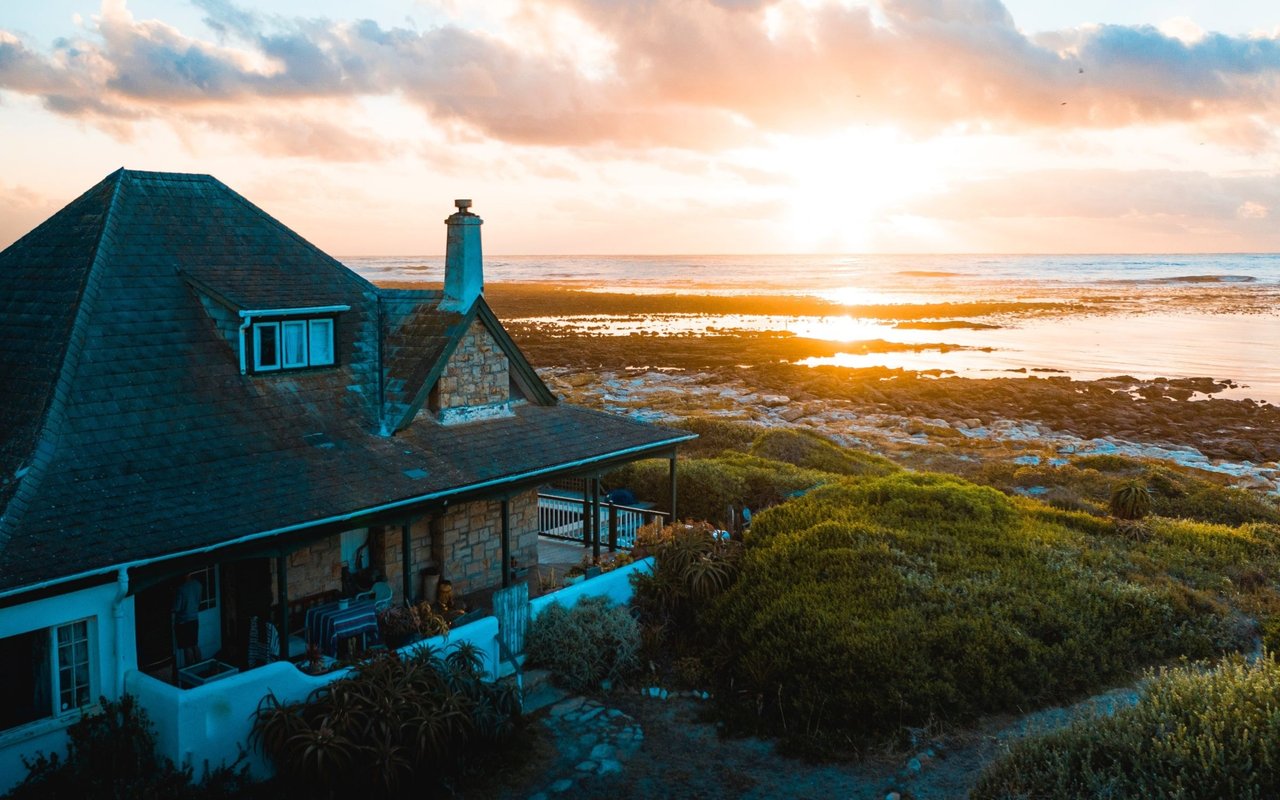
- Ocean Drive delivers a 10-mile coastal loop with large seaside lots, big views, and a private, outdoor-forward lifestyle. Plan to drive for most errands.
What defines each address
Bellevue Avenue and the Mansion District
Bellevue Avenue is the spine of Newport’s Gilded Age summer colony and part of the Bellevue Avenue Historic District, a National Historic Landmark area. Many landmark homes along the corridor, including The Breakers, Marble House, Rosecliff, and The Elms, are preserved and operated by the Preservation Society, which shapes the avenue’s identity as a living architectural museum. You will find formal lawns, stone walls, and garden compositions that create a park-like experience along the street. Learn more about the corridor’s preservation story on the Preservation Society’s Bellevue Avenue page.
Ocean Drive and the coastal loop
Ocean Drive, also a National Historic Landmark District, follows Newport’s southern shoreline through rolling coastal terrain. The landscape owes some of its character to Frederick Law Olmsted’s influence, and homes here are generally less ostentatious than Bellevue’s museum mansions. Think shingle style and country-by-the-sea compounds set to maximize views and privacy. Explore the setting through the Ocean Drive Historic District overview, then picture the lifestyle described in this scenic drive guide.
What you see on each street
Architecture and lots on Bellevue
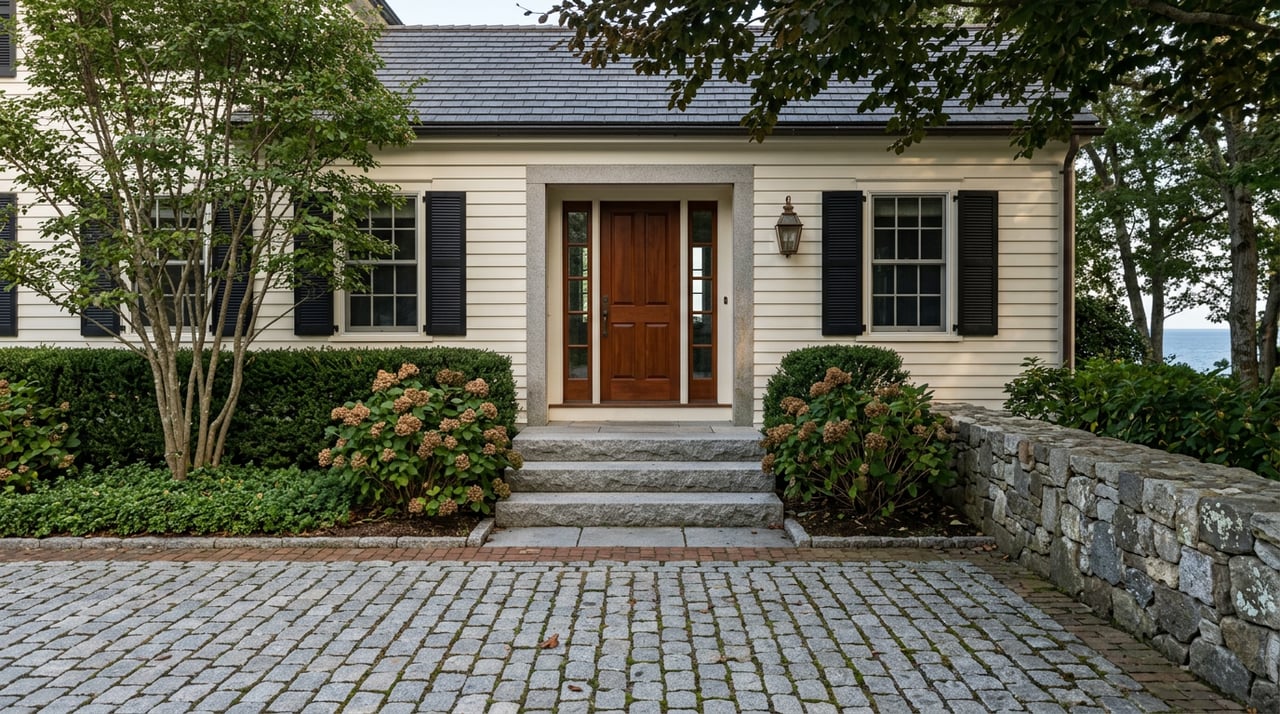
Bellevue showcases Beaux-Arts, Italian Renaissance Revival, Neo-Classical, shingle, and late-Victorian styles. Many properties were designed for grand indoor events, with large public rooms and even ballrooms. Several marquee mansions are museum properties, which reinforces preservation standards and a refined streetscape.
Architecture and lots on Ocean Drive
Ocean Drive features seaside estates set on dunes, bluffs, and pastured lawns. Buildings sit back from the road to capture ocean frontage and long views. The corridor is a scenic landscape route, not an urban main street, with very few commercial structures inside the district.
Daily life and routines
Walkability and errands
If you want to walk to cafés, museums, and some services, Bellevue offers a more convenient base. The corridor sits in the “Somewhat Walkable” range on Walk Score’s Bellevue Avenue page, which reflects proximity to cultural venues and dining.
Ocean Drive is very car dependent. A sample Ocean Avenue location scores in the single digits on Walk Score, showing that you will drive for groceries, schools, and most daily errands.
Traffic and tourism
Bellevue sees seasonal museum visitors, guided trolleys, and foot traffic tied to tours and festivals, which adds lively street life at peak times. Ocean Drive attracts sightseers and cyclists too, but activity is spread across the 10-mile loop with park pull-offs and fewer concentrated hotspots, so it feels quieter between stops. For a sense of the Ocean Drive rhythm, see the scenic drive overview.
How you like to entertain
Formal indoor hosting on Bellevue
Prefer black-tie dinners, concerts, or formal gatherings? Many Bellevue-era houses include grand entertaining rooms designed for large indoor events. Historic examples often highlight preserved ballrooms and reception spaces in their materials, underscoring the corridor’s legacy of formal entertaining.
Outdoor living on Ocean Drive
If your style is sunset cocktail hours, poolside weekends, and lawn parties with the sound of the surf, Ocean Drive delivers. The setting is optimized for terraces, gardens, and al fresco gatherings with uninterrupted water views, as showcased in the Ocean Drive guide.
Water, beaches, and boating
Ocean Drive runs along open ocean and Narragansett Bay exposures, with public assets like Brenton Point State Park and access to beaches nearby. Many owners value immediate shoreline views and recreation. Private docks are limited by shoreline and permitting rules, but moorings and marina access are available in Newport Harbor and nearby coves.
Bellevue properties may back onto the Cliff Walk or sit near smaller beaches. Some have water views, but you will often drive a short distance to larger public beaches or harbor facilities. The tradeoff is proximity to both ocean and harbor settings and quicker access to downtown.
What the market usually offers
- Bellevue Avenue area: You will find restored historic condos and townhomes in the mid six figures to low seven figures, which offer the address without estate-scale maintenance. Private single-family properties and estates on or near the corridor can reach well into the seven figures, with premiums for ocean or harbor frontage and significant gardens.
- Ocean Drive: Detached seaside estates commonly trade in the multi-million range. Direct-water and very large properties can reach higher price brackets, reflecting privacy, land, and views.
Inventory is limited and changes quickly in both areas. Use a current MLS snapshot to confirm pricing at the time you search.
Long-term planning: permits, risk, and cost
Historic district oversight
Both corridors fall within Newport’s historic framework, which means most exterior changes need review. Expect to apply for a Certificate of Appropriateness through the City’s Historic District Commission. You can view the application process in the City of Newport HDC guide. If you are considering a qualifying rehabilitation, state and federal historic tax credits may help offset approved work. Learn more about programs at Preserve Rhode Island.
Flood and insurance checks
Ocean Drive homes tend to sit closer to high-exposure shoreline, so they are more likely to fall within FEMA Special Flood Hazard Areas or coastal V zones. Bellevue lots vary by elevation and distance from the water. Newport’s planning documents highlight coastal flooding, wave action, and sea level rise as ongoing concerns for low-lying areas. Review the city’s Hazard Mitigation Plan, then run address-level checks using FEMA FIRMs and NOAA projections. This NOAA environmental assessment offers helpful context for local coastal considerations.
Practical takeaway: price in potential flood premiums, seawall or elevation work, and shoreline-structure limits. These factors do not rule out ownership, but they do shape long-term costs.
Maintenance realities
Large historic houses carry specialized maintenance needs, from heritage materials and complex systems to formal grounds. Many owners work with preservation architects and conservators. Certified rehabilitation incentives exist, but they require pre-approval and strict standards. See Preserve Rhode Island for guidance on preservation programs.
Quick buyer-match checklist
- You want to walk to museums and restaurants, and you love history up close: choose Bellevue Avenue.
- You want everyday privacy, big ocean views, and outdoor entertaining space: choose Ocean Drive.
- You host formal dinners and concerts in grand rooms: Bellevue fits your style.
- You prioritize beach days, scenic drives, and sunset terraces: Ocean Drive fits your routine.
- You want lower exposure to shoreline risk: Bellevue locations that sit higher or inland may offer some advantages, but always verify property-specific flood zones first.
Next steps
Your address should mirror how you live, host, and unwind. If you want walkable culture and formal spaces, Bellevue delivers. If you crave ocean horizons and open-air gatherings, Ocean Drive is hard to beat. Either way, a smart plan includes permit strategy, flood review, and an ownership budget that matches the house.
Ready to compare options on the ground or via our Digital Buyers Consult if you are remote? Connect with Devin Sheehan to map the right Newport address for your lifestyle and timeline.
FAQs
What is the main lifestyle difference between Bellevue Avenue and Ocean Drive?
- Bellevue offers walkable access to museums and dining, while Ocean Drive emphasizes privacy, coastline views, and driving for daily errands.
How walkable is Bellevue Avenue compared to Ocean Drive?
- Bellevue sits in the “Somewhat Walkable” range on Walk Score, while a typical Ocean Avenue location is very car dependent based on low Walk Score results.
Are there special permits for renovating historic homes in Newport?
- Yes. Most exterior work in both corridors requires a Certificate of Appropriateness through Newport’s Historic District Commission, so build extra time into your plans.
Is flood risk higher on Ocean Drive than on Bellevue Avenue?
- Often yes, because many Ocean Drive lots sit closer to exposed shoreline; verify any address using FEMA FIRMs and review Newport’s Hazard Mitigation Plan and NOAA resources.
Can I find condos near Bellevue Avenue if I want the address without an estate?
- Yes. Restored historic condos and townhomes are common around Bellevue and often trade in the mid six to low seven figures, subject to current inventory.
What should I budget for long-term maintenance on a historic property?
- Expect higher costs for specialized materials, systems, and grounds care; consider consulting preservation professionals and exploring eligible rehabilitation incentives.